Distinguished Plenary Lectures
We are pleased to announce that IISA2025 will feature TEN Distinguished Plenary Speakers. Further details about their lectures will be shared as they become available.
#1 Propagation and Mitigation Model of Mixed Road Traffic Noise for Kanpur
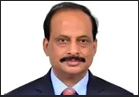
Prof. Manoranjan Parida, Department of Civil Engineering, Indian Institute of Technology, Roorkee has taken over charge of Director, CSIR-Central Road Research Institute on 20th September, 2022.
Prof. Manoranjan Parida was Deputy Director at IIT Roorkee before joining CSIR-CRRI. He has been MoRTH Chair Professor on Development of Highway System in India at IIT Roorkee during 2013-2017. He has worked on an Imprint Research Project “Propagation and Mitigation Model of Mixed Traffic Noise for Planning Mid-Sized Indian Cities”. Design and Development of Noise Barrier for Flyovers in Delhi is an innovative contribution by him. He has provided substantial inputs for third party quality audit of 1700 km. of State Highway in the State of Bihar (during 2007-2013) under the RSVY Project. He has provided consultancy for more than 350 urban road infrastructure projects, intercity corridors, rural roads, and expressways. He received Pt. Jawaharlal Nehru Birth Centenary Award in the year 2004 from Indian Road Congress. He has received the Outstanding Teacher Award of IIT Roorkee. He is presently Convener of Traffic Engineering & Transportation Planning (H-1) of Indian Roads Congress, New Delhi and Convener of Bitumen, Tar & Other Products (PCD 6) Committee of Bureau of Indian Standards. Currently Prof. Parida is President of Indian Roads Congress.
Director, CSIR-Central Road Research Institute, New Delhi, India.
My lecture shall explain development of a scientifically robust model to assess and mitigate mixed road traffic noise for Kanpur City taken up under IMPRINT Project. The primary outcome of this research has been a traffic noise propagation and mitigation model suitable for Indian mid-sized cities, where road traffic is typically mixed and complex. The research involved extensive field data collection across residential, commercial, industrial, and silence zones of the City and a detailed classified volume and speed analysis across different vehicle types, including electric vehicles. Traffic Noise Modelling was taken up through REMEL (Reference Energy Mean Emission Level) equations for 11 vehicle categories and FHWA-based models to estimate equivalent noise levels (Leq) with high accuracy. Noise Mitigation aspect were studies through attenuation effects of vegetation, distance, and physical barriers like boundary walls.
.
#2 Community-based approaches to creating sound-based place identity
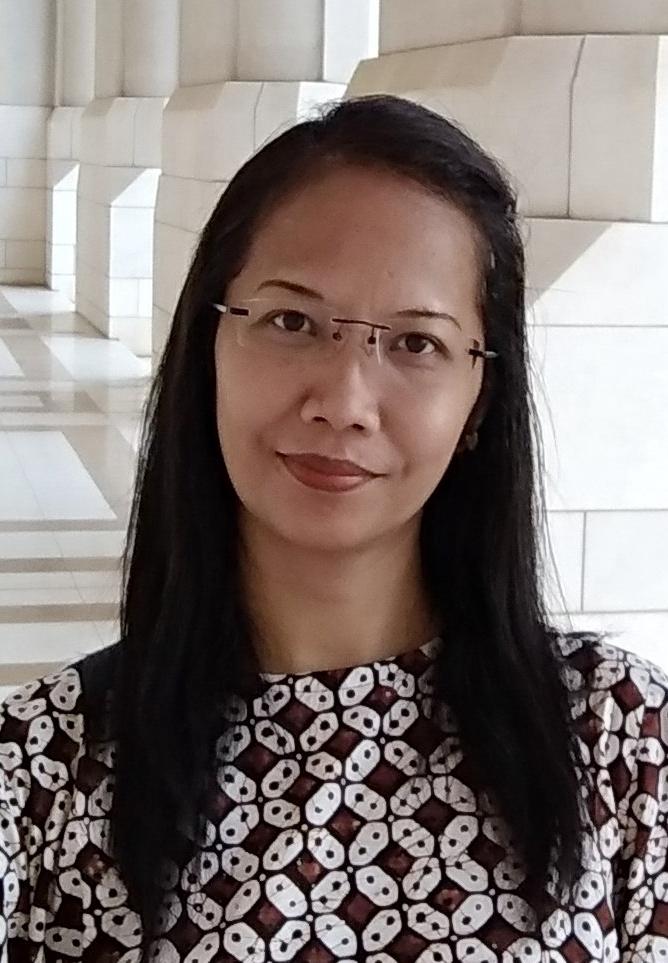
Christina Mediastika is a tenure-track Professor of Architecture at the School of Creative Industry, Universitas Ciputra Surabaya, Indonesia. She holds a doctoral degree from the University of Strathclyde. Her primary area of expertise is architecture, focusing on architectural and environmental acoustics. She developed an interest in this field due to the community's low awareness and limited knowledge regarding the importance of sound in daily life. Often undervalued in architecture, sound is an element that Christina strives to incorporate into her students' design projects from the outset. Her understanding of sound's significance in our environment deepened when she began working with visually impaired communities in 2017. Through this experience, she learned that an ideal sound environment consists of background and distinctive sounds. This awareness is essential for the visually impaired and benefits everyone, as human ears are more sensitive than our eyes when perceiving surroundings. This means they let both positive and negative surrounding conditions into our body more readily than the eyes, which can be closed for unwanted visuals. Unfortunately, this sensitivity is not usually utilised or trained as much as our visual senses. In addition to her work with visually impaired individuals, Christina has recently initiated a research series aimed at preserving and, where necessary, restoring the unique historical sounds of Indonesian cities. She sees these sounds as treasures of the country's intangible heritage and a crucial part of urban identity, which modern lifestyles have significantly taken over. Christina and her team's works have been published in reputable journals, conference proceedings, and books.
Dept. of Architecture Universitas Ciputra Surabaya, CitraLand, CBD Boulevard, Made, Sambikerep, Surabaya 60219, Indonesia.
Sound is often an undervalued aspect of life, especially in developing countries, where low awareness about its significance stems from more pressing concerns like food security and financial stability. A review of noise profiles and law enforcement in developing nations within the ASEAN region highlights this issue, supported by the value of society over the self. In such contexts, the noise generated by communities is often not viewed as problematic. Acoustic environments in these countries are dominated by traffic noise, lacking distinctive sounds that help establish a place’s identity, which is particularly important for visually impaired individuals in countries like India and Indonesia, which have the highest blind populations globally, according to the UNDP in 2017. Unique sounds are vital for blind individuals as they help navigate and identify potential dangers. Before modern machinery and lifestyles, each location had distinctive sounds, often from daily life, cultural practices, and transportation. These sounds helped distinguish one place from another. However, preserving these distinctive sounds has become increasingly complex with the shift to modern living forms. A feasible approach to preserving these sounds is through virtual preservation before they are lost with the passing of source persons who experienced them. This effort involves qualitative and quantitative methods, with local communities, including blind people, playing a key role in data collection. Given the subjective nature of sound perceptions, researchers must consider diverse factors and recommendations to translate their findings into virtual and real-world settings effectively.
#3 Underwater Domain Awareness (UDA) Framework Driven
Arnab is a researcher, maritime strategist, and entrepreneur. He is the Founder & Director of the Maritime Research Centre (MRC) under the Foundation for Underwater Domain Awareness (FUDA), Pune, which is working on a unique concept of Underwater Domain Awareness (UDA) as its main focus. He also runs his Start-up, M/S NirDhwani Technology Pvt Ltd which provides consultancies and services for high-end maritime security solutions and marine conservation support. He advises start-ups on underwater technology solutions and defence strategies. He has over 100 publications, a book, and two book chapters to his credit. Arnab was commissioned as an electrical officer in 1994. He was deputed to IIT Delhi in 2001 for his Master's in Underwater Electronics and subsequently appointed as the Project Officer at IIT Delhi to manage the Navy's Underwater R&D. He delivered multiple technology transfers, including for the strategic submarine project related to underwater systems and algorithms. He also completed his PhD from IIT Delhi in 2007 in underwater signal processing. He was invited to Tokyo University in 2014 as a visiting researcher to participate in the design and development of passive acoustic monitoring systems for freshwater dolphins. He was also at the Acoustic Research Laboratory of the Tropical Marine Science Institute at the National University of Singapore in 2015 for a year, post his retirement from the Navy to understand underwater technology development from a global perspective.
Dr(Cdr) Arnab Das, Founder & Director
Maritime Research Center (MRC)
The tropical waters both in the marine and freshwater systems present unique
challenges for Underwater Domain Awareness (UDA) across varied applications. The
sonar deployed for any underwater applications in the tropical waters, suffers over
60% performance degradation, compared to the temperate and polar waters, where
they were originally designed and developed. Most of our deployment strategies are
formulated in the temperate/polar waters, thus this performance limitation is a serious
concern. The digital transformation in the underwater domain, referred as Marine
Spatial Planning (MSP) is the well-known governance tool for managing the
challenges and opportunities across varied applications. However, implementation of
MSP in the tropical waters with the unique sonar performance challenges is an
interesting research and innovation problem. The UDA framework proposed by the
author, provides a comprehensive, structured and inclusive way forward for policy and
technology intervention along with acoustic capacity & capability building to ensure
real-time and futuristic realization of the MSP in the tropical waters. The
comprehensive, translates to include all the stakeholders across applications with
stakes in the underwater domain. The structured framework allows seamless and
effective interaction among the stakeholders and enablers to make it happen. The
inclusiveness allows each and every section, including the coastal and riverine
communities to be part of the developmental process and accrue justified and
equitable benefit. The nuanced policy interventions have to ensure a safe, secure,
sustainable growth for all in the region. This will involve a multi-disciplinary and multisectoral approach to ensure cohesive and nuanced way forward, deeply rooted to the
local socio-political, socio-economic and socio-cultural realities. The technology
interventions have to ensure real-time monitoring of the site-specific tropical conditions
across varied applications. This will involve core capabilities in Digital Signal
Processing (DSP), Robotics, Data Science and more. The capacity and capability
building has to be across the entire chain of policy makers, stakeholders, practitioners,
indigenous communities and more to ensure enhanced UDA driven MSP. The
conventional approach has been extremely fragmented, with each stakeholder trying
to manage their own issues in a limited sense. The fragmentation distributes the
resources, making it unviable to plan high technology Research & Development (R&D)
approach including Modelling & Simulations (M&S), backed by field experimental
validation in the tropical waters. M&S will allow precise prediction of future events and
ensure effective policy interventions. Pooling of Resources and Synergizing of Efforts
across the stakeholders is the key to ensure optimum resource deployment and the
UDA framework facilitates this for the developing nations with limited resources. The
tropical waters are known for rich bio-diversity and high underwater mineral resources,
however still the nations in the region are not able to harness the benefits and remains
victims of natural disasters and security boogey. Geopolitical and geostrategic
meddling by the extra-regional powers can be effectively countered, if we implement
the UDA framework driven MSP for the tropical waters. UDA framework driven MSP
can be a game changer ensuring good governance. This talk will elaborate on this
critical issue with multiple case studies and real-world implementation stories.
#4 Explainable Speech and Sign Language Processing using Posterior Features
Dr. Mathew Magimai Doss received the Bachelor of Engineering (B.E.) in Instrumentation and Control Engineering from the University of Madras, India in 1996; the Master of Science by Research in Computer Science and Engineering from the Indian Institute of Technology, Madras,India in 1999; the PreDoctoral diploma and the Docteur ès Sciences (Ph.D.) from the Ecole polytechnique fédérale de Lausanne (EPFL), Switzerland in 2000 and 2005, respectively. He was a postdoctoral fellow at the International Computer Science Institute (ICSI),Berkeley, USA from April 2006 till March 2007. He is now a Senior Research Scientist at the Idiap Research Institute, Martigny, Switzerland. He is also a lecturer at EPFL where he teaches courses on automatic speech processing and digital speech and audio coding. His main research interest lies in signal processing, statistical pattern recognition, artificial neural networks and computational linguistics with applications to speech and audio processing, sign language processing and multimodal signal processing.
idiap Research Institute
Rue Marconi 19
CH-1920 Martigny
Switzerland
Tel: +41 27 721 77 88
Fax: +41 27 721 77 12
(Office: 201.1a)
Communication using natural language is integral part of our lives. With the advancement of deep learning methods, speech and other natural language-based communication technologies are getting integrated into our day-today lives. Despite tremendous success, language technologies are increasingly becoming opaque, i.e., less explainable and interpretable. For wide-spread adoption of these technologies especially in areas such as, health and education, there is a need for frameworks that not only can exploit large amount of data to model variabilities but at the same time are explainable and interpretable.
In this talk, I will present a "posterior feature" based framework for speech and sign language processing. In this framework, the feature representations are “probabilistic” in nature, more precisely, posterior probabilities of linguistic units or automatically derived subunits estimated from the observed signal. By elucidating a link to symbolic sequence processing, I will demonstrate how this statistical framework, while leveraging from advances in deep learning methods, (a) enables seamless exploitation of auxiliary resources and integration and inference of linguistic prior knowledge for multilingual speech processing and speech assessment, (b) leads to a unified explainable approach for speech processing and sign language processing that jointly models “production-perception” phenomena, and (c) provides a statistical interpretation of speech foundation models such as, wav2vec2, HuBERT and wavLM and helps in gaining insight into how the different information in speech signal are potentially captured by these models.
#5 Physics Informed Neural Networks (PINN) solution for High-Frequency Acoustic Wave Propagation in Ducts
Dr. B. Venkatesham is a Professor and Head of the Department of Mechanical and
Aerospace Engineering at IIT Hyderabad. He obtained his Master’s and Ph.D. degrees
from the Indian Institute of Science (IISc), Bengaluru, and has over 25 years of
experience in industrial noise control. Before joining IIT Hyderabad in 2010, he worked
for about a decade as a Lead Engineer at the General Electric Global Research Centre. His research interests include Engineering Noise Control, Sound Quality, and System
Engineering. He is a Life Fellow of the Acoustical Society of India and a consultant to
several industries and government organizations in the areas of Noise, Vibration, and
Harshness (NVH). Dr. Venkatesham has supervised seven Ph.D. scholars and co-authored 40 journal papers,
54 conference papers, four patents, and seven design patents. He is also a co-author of the
book Noise and Vibration Control. He has conducted numerous industrial training
programs and completed over 27 sponsored and consultancy projects. He played a key
role in establishing the Entrepreneurship Ecosystem at IIT Hyderabad and served as
Faculty-in-Charge of Placements for five years.
Professor and Head of the Department of Mechanical and
Aerospace Engineering at IIT Hyderabad
The propagation of acoustic waves in a medium as a function of frequency is expressed by the Helmholtz equation, a second-order partial differential equation in terms of acoustic pressure or particle velocity. The solutions to this equation for given boundary and initial conditions are well known for simple duct geometries. New methods are being developed to integrate physics-based and data-driven approaches to solve partial differential equations. However, these methods have challenges in terms spectral bias (training high frequency features) and computational time. This present work studies the applicability of physics-informed neural networks (PINNs) in solving the Helmholtz equation for a specific case of wave propagation in a duct with various boundary conditions at higher frequencies. The development of PINN methods requires proper normalization of the PDE and careful tuning of network parameters. A parametric study will be conducted to explore the selection of weightage, randomization of collocation points, learning rate, and other factors. The predicted solutions will be validated against traditional methods.
#6 Architectural Acoustics for AI Infrastructure: Precision Design for Speech Data Environments.
Dr. R. Kalaiselvi is an Architect–Acoustician, Researcher, and Educator whose work integrates architectural design, environmental acoustics, and sound heritage research. She is the Principal Architect of MAK Architects, Chennai, and the Founder and Chief Acoustician of D-Acoustics, a consultancy specializing in auditoria, performing arts venues, laboratories, studios, and precision acoustic environments.
With over a decade of experience, she has led or contributed to more than 100 acoustical and architectural projects across India. Her significant works include the SRM Amaravati Auditorium, Samsung speech data centre, NPTEL Recording Studios at IIT Madras and IIT Tirupati, and major research facilities such as the National Pavement Testing Facility and the Heavy Structures Laboratory at IIT Tirupati. Her design philosophy emphasizes performance-driven acoustics — balancing measurable acoustic parameters such as RT60, C80, and STI with spatial and architectural integrity.
Dr. Kalaiselvi completed her Ph.D. at IIT Madras in Urban Soundscapes, where she developed a novel “Honking Noise Correction Factor” for heterogeneous Indian traffic conditions, offering a new dimension to environmental noise modelling in Indian cities. Her research under the DST Science and Heritage Research Initiative (SHRI) focuses on technology interventions for indigenous handcrafted products of Tamil Nadu and the acoustical documentation of heritage environments. She has measured and evaluated the absorption coefficients of traditional Tamil building materials, studied the temple acoustics of the Early Chola period, and conducted acoustical characterization of traditional musical instruments such as the Veena, Nadaswaram, and Yazh.
she received the Young Scientist Grant Award from the International Commission for Acoustics (ICA) for the excellent contribution in the field of acoustics. Combining scientific precision with architectural sensitivity, As an Professor at Rajalakshmi School of Architecture, she continues to mentor students and professionals, advancing interdisciplinary research that unites architecture, technology, and the science of sound.
Prof, Rajalakshmi school of Architecture and Chief Acoustician – D Acoustics
The evolution of voice-based technologies and artificial intelligence has created a demand for the creation of Speech Data Centers (SDEs) – specialized infrastructure where sound is both the input and output variable of computational intelligence. Unlike conventional data centers SDEs demand room acoustic precision to ensure high-fidelity speech capture, reproducible aural conditions and controlled acoustic metrics essential for algorithmic training and validation.
The facility is conceived as a room-in-room system, designed with five discrete layers of isolation and absorption to achieve superior acoustic separation. Each layer integrates dense structural mass, Viscoelastic damping membranes decoupled resilient mounts and brad brand absorptive interfaces, Collectively achieving noise criterion levels below NC15. The mechanical systems are acoustically silenced through vibration isolation mounts.
Spatial geometry and surface morphology are computationally optimized to suppress flutter echo, modal coupling and specular reflections, ensuring a diffuse and uniform sound field across the room. Variable acoustic modules – Consisting of rotating panels and tuneable porous absorbers – enable the reverberation time (RT30) to be adjusted between 0.09s to 0.3s, allowing the facility to emulate environments from anechoic to living room conditions.
The post-occupancy acoustic measurements demonstrate clarity (C80>+8dB), definition (D50>0.75) and Speech Transmission Index (STI>0.8), validating the design’s ability to support speech-based machine learning tasks with minimal coloration and high signal to noise rations. The integration of real-time acoustic monitoring and adaptive feedback systems ensures consistent performance under dynamic operational loads.
This precision -driven design framework positions building acoustics as a critical infrastructure layer within AI ecosystems, establishing the spatial and acoustic fidelity required for next generation speech cognition and intelligent auditory systems.
#7 Towards Language Technology for All: A Zero-Resourced S2ST Approach for Unknown, Unpaired, and Untranscribed Languages
Sakriani Sakti is the head of the Human-AI Interaction (HAI) Research Laboratory at NAIST, Japan. She also serves as a full professor at NAIST, an adjunct professor at JAIST (Japan) and the University of Indonesia, and a visiting research scientist at RIKEN AIP (Japan). She is a member of JNS, SFN, ASJ, ISCA, IEICE, and IEEE, serves on the IEEE SLTC (2021–2026), and is an associate editor for IEEE/ACM TASLP, Frontiers in Language Sciences, and IEICE.
Previously, she was actively involved in international collaboration activities, including the Asian Pacific Telecommunity Project (2003–2007) and several speech-to-speech translation research projects such as A-STAR and U-STAR (2006–2011). She also served as a visiting scientific researcher at INRIA Paris-Rocquencourt, France (2015–2016). Additionally, she was the General Chair for SLTU 2016, chaired the “Digital Revolution for Under-resourced Languages (DigRevURL)” Workshops at INTERSPEECH in 2017 and 2019, and was part of the organizing committee for the Zero Resource Speech Challenge in 2019 and 2020.
She was recently appointed as the Oriental-COCOSDA Convener, representing the Asian community in spoken language resources and technologies, which brings together 18 countries and regions across Asia. She also serves on the ELRA Board and the ISCA Board. She played a pivotal role in establishing the ELRA–ISCA Special Interest Group on Under-resourced Languages (SIGUL), serving as its Chair since 2021 and organizing its annual workshops. In collaboration with UNESCO and ELRA, she was the General Chair of the Language Technologies for All (LT4All) Conference in 2019, which focused on “Enabling Linguistic Diversity and Multilingualism Worldwide.” Most recently, she led LT4All 2025, held under the theme “Advancing Humanism through Language Technologies.”
Sakriani Sakti is the head of the Human-AI Interaction (HAI) Research Laboratory at NAIST, Japan.
Speech-to-speech translation has emerged as a promising solution for breaking linguistic barriers, enabling direct translation between spoken languages without relying on text. However, current systems still depend heavily on large parallel datasets and are limited to well-documented languages. This paper introduces a zero-resource approach to speech-to-speech translation designed for unknown, unpaired, and untranscribed languages, contributing to the vision of Language Technology for All (LT4All). The proposed framework operates in two stages: (1) discovering semantically related speech pairs from unpaired data using self-supervised, visually grounded speech models, and (2) achieving textless translation through discrete speech representations and sequence-to-sequence modeling. Experimental results demonstrate the system’s ability to perform direct translation without transcriptions or parallel corpora, showing strong potential for advancing zero-resource speech processing and inclusive multilingual communication.
#8 Ultrasonic Propagation Velocity Measurement: Metrological Perspective
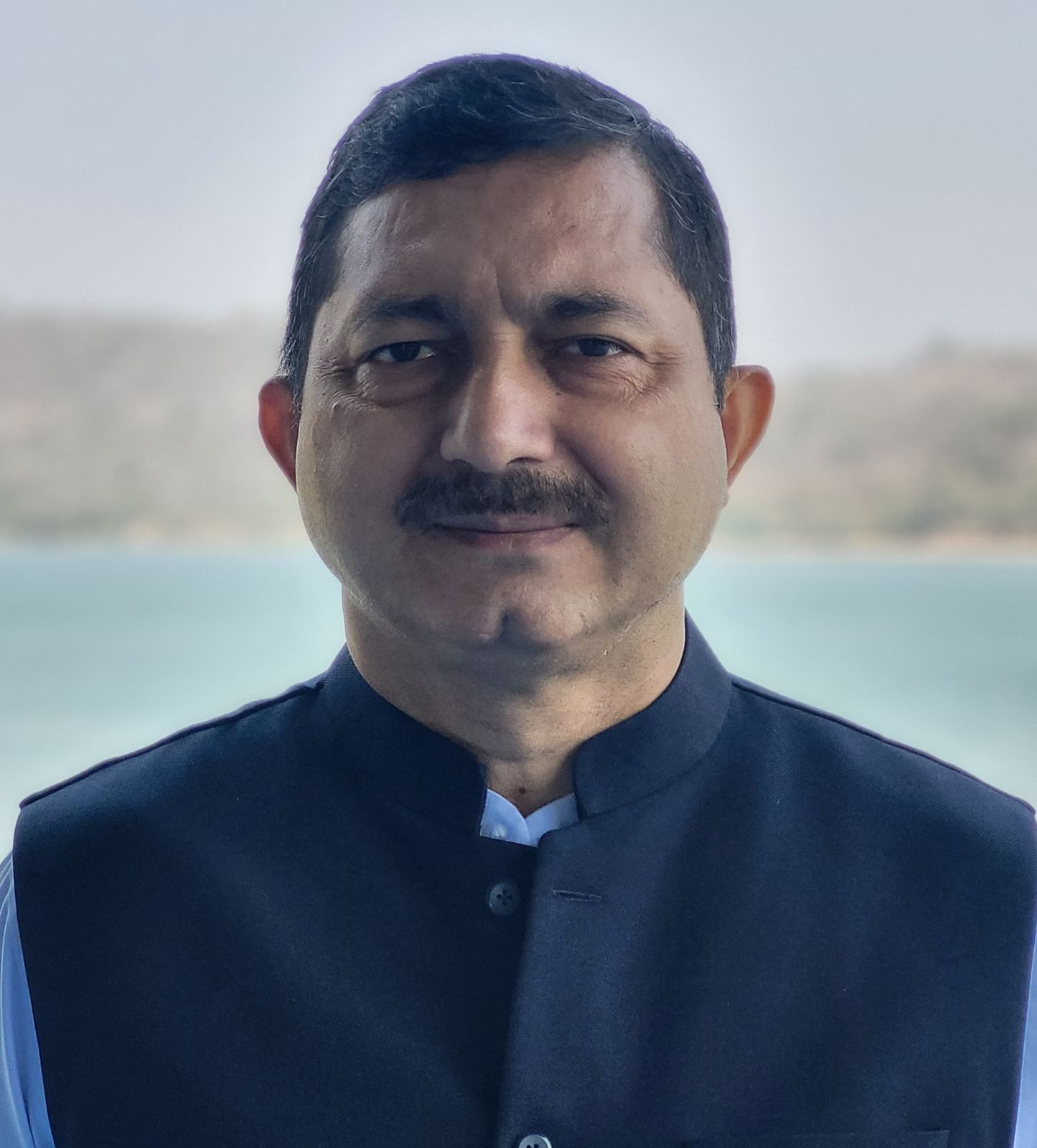
Presently, working as Senior Principal Scientist in Ultrasonic Metrology of CSIR-NPL, India and holding major responsibility for maintaining, upgradation of ultrasonic metrology related activity and develop indigenous technologies.
His interest is in the design and development of scientific instruments and ultrasonic Instruments with improved parameters.
Some of his achievements involve the development of unique Micro-pulse LIDAR first time in the country with Dual Polarization facility used for atmospheric studies. Few other developments, are Electromagnetic Acoustic Transducer (EMAT) for the non-contact generation and detection of ultrasound in metallic structures. He has also developed a UPV device for the testing of concrete structures.
He has 8 patents, developed 6 Technologies out of which 3 have been transferred to Industry and available in the market. He has more than 40 SCI publications related to scientific instruments development, 3 book chapters and about 70 conference papers.He is fellow of Metrology Society of India (MSI) and Ultrasonics Society of India (USI) and also holding responsivity of General Secretary of USI.
He is member in various committees of Bureau of Indian Standards (BIS), Like Non-Destructive Testing Sectional Committee (MTD 21), The Electronic Measuring Instruments, Systems and Accessories Sectional Committee (LITD 08) and Educational Instruments & Equipments Sectional Committee (PGD 22)
Senior Principal Scientist in Ultrasonic Metrology of CSIR-NPL
Ultrasonic velocity is the fundamental parameter in almost all ultrasonic applications may it be liquid characterization, non-destructive testing or medical imaging. Various devices and techniques are used for the estimation of ultrasonic velocity both for solids and liquids. The most widely used and cost-effective approach for the velocity measurement in liquid media is the ultrasonic interferometer. Interferometers are generally used to obtain the thermo-acoustic, physical and chemical properties of the liquids. The interferometers excite ultrasonic transducers with relatively higher amplitude (ex 100 V) produces heat in the sample under test due to continuous wave excitation. Apart from higher excitation mechanical movement-based reflector type interferometer have additional issues. On the other hand, pulse-based velocity measurement systems contribute to measurement error due to threshold based received signal detection. In this presentation various issues in interferometric approach and the method to minimize such effects is described. The methodology of dual threshold detection to minimize the error contribution in threshold-based measurement is also included.
#9 Acoustics of under-researched languages: where errors speak louder than accuracy
Priyankoo Sarmah is Professor of Linguistics at IIT Guwahati. Trained at the University of Florida, his research explores the sound systems of under-researched languages and their application in speech technology. He works at the intersection of phonetics, phonology, and machine learning, focusing on how speech variation informs language technology design. Prof. Sarmah has led projects on speech corpora, tone and prosody analysis, and multilingual speech processing. His recent work highlights how insights from lesser-studied languages can reshape our understanding of language technology development.
Priyankoo Sarmah is Professor of Linguistics at IIT Guwahati
The development of language technology follows a long and tedious, but familiar path of analysis of languages, summarising the findings and finally implementing technology based on the findings. Yet these logical and seemingly successful paths overlook language-specific aspects that could make language technology better. Methods that succeed for high-resource languages are usually followed for all languages with little or no adaptation. This talk will draw insights from the analysis of several under-researched languages to show how uniform approaches may affect language technology development. The talk suggests that the path to language technology development may need some rethinking from the ground up, even with the ubiquity of AI tools in speech research.
#10 Management of Construction Noise and Vibration from Large Scale Infrastructure Projects in the UK
Paul has spent over 35 years working in acoustic consultancy and research and a Fellow of the Institute of Acoustics (IOA) In 2024 he took on a lecturing role with University of Derby. His areas of expertise include environmental noise and vibration particular regarding industry, large scale construction and railways and in leading teams. He has worked on some of the UK’s largest engineering projects including Crossrail, Thames Tideway Tunnel and High speed 1 and 2.
He serves on various IOA committees and in 2024 he became President Elect. Previously he also served as a board member of the Association of Noise Consultants (ANC), including time as its Chair. His involvement and networking in the IOA and ANC means he brings a comprehensive knowledge of who are the relevant experts across different fields in the UK acoustics industry. He believes strongly in providing opportunities for all to develop themselves, not just for early careers but for those who wish to build or just maintain competence in their chosen fields
Before joining the university, he led the AECOM Acoustics team of over 50 staff providing consultancy services on a broad range of topics associated with sound and vibration. These include environmental noise impact assessments, complex infrastructure developments, building acoustics, long term noise and vibration monitoring, and acoustics related research.
Paul’s career in acoustics began in the rail industry focussing on wheel/rail noise control and rail vehicle acoustics. This was followed by several years as an independent consultant working for train manufacturers and for London Underground where he was responsible for assessing and finding engineering solutions to N+V complaints. He then worked with Alstom on the acoustic performance of the Class 390 train.
Institute of Acoustics
406 Silbury Boulevard
Milton Keynes MK9 2AF
Large-scale infrastructure projects deliver significant benefits to society, but they can also cause prolonged disruption for communities living near construction sites. This presentation explores current best practices in managing construction-related noise and vibration, drawing on insights from recent UK infrastructure projects. The presentation will include:
#11 Audio Experiments based Insights into how Deep Learning Architectures may improve Active Noise Cancellation
Professor Arun Kumar received the B.Tech, M.Tech and PhD degrees from IIT Kanpur and was Visiting Researcher at the University of California, Santa Barbara, USA for 2 years. He is with the Centre for Applied Research in Electronics, IIT Delhi since 1997 and has served as Head of the Centre for 7 years. He is also co-founder and Director of two technology companies that work in AI, Speech Technology products, and Signal Processing Electronics and Software solutions.
Professor Arun Kumar’s R&D interests are in DSP, underwater and air acoustics, human and machine speech communication, and multi-sensor data fusion. He is an inventor on 11 US patents and 2 Indian patents, all granted. He has supervised 21 PhDs and published 170 papers in peer reviewed journals and conferences. At IIT Delhi, he has been Project Investigator for 75 funded R&D projects from DRDO labs, Navy, government ministries and national and international industries. These projects have led to 25 Technology and Know-how transfers. Many of these technologies are deployed in the field for practical use.
Professor Arun Kumar is serving on the Executive Committee of Govt. of India’s ambitious National Language Translation Mission whose goal is to develop automatic speech-to-speech translation technologies in all the scheduled languages of the country. He received the Ram Lal Wadhwa Award of the Institution of Electronics and Telecommunications Engineers for “outstanding contributions in the field of Underwater Electronics in the last 10 years”.
Arun Kumar
Centre for Applied Research in Electronics
Indian Institute of Technology Delhi
Hauz Khas, New Delhi – 110016.
Active Noise Cancellation (ANC) has emerged as an important technological tool to mitigate low frequency acoustic noise. Conventional ANC systems are typically based on adaptive linear filtering algorithms like the Filtered-X Least Mean Square (Fx-LMS) algorithm that have been extensively studied and adopted. These algorithms present fundamental limitations in terms of effective range of noise suppression, ability in handling wideband noise and equipment nonlinearities amongst others.
In this lecture, we will explore how deep learning architectures may be incorporated to effectively enhance ANC system performance. Apart from their inherent ability to model nonlinear system characteristics, we will see that these architectures are better suited at suppressing wideband noise and extending the quiet zone compared to reference ANC systems based on Fx-LMS adaptive filter architectures. We will discuss the effectiveness, fundamental properties and advantages that these novel ANC architectures present through series of audio experiments performed in our laboratory. Multi-channel ANC systems based on deep learning architectures extend the effectiveness of single-channel ANC systems further as seen from our experiments. Finally, we will discuss about a fully functional real-time ANC system setup based on deep learning architecture and present some of its results.
#12 Design and development of Sound Detection and Ranging System (SODAR) for Air Quality Management
Dr. Kirti Soni completed her M.Sc. and Ph. D. from Sagar University. Dr. Kirti Soni joined CSIR - National Physical Laboratory (NPL), National Metrological Institute of India, as a scientist, New Delhi at 2007 where she worked in Acoustics and Vibration Metrology section. At CSIR -NPL, about fifteen years, she worked on design and development of building material for noise abatement, calibration and testing of building materials, design and development of SODAR (Sound Detection And Ranging) system for air quality management etc. She worked on different projects of government organizations and private industries of building materials design and development and air quality management etc. She is working on a National Clean Air project with Indian Meteorological Department (IMD), Delhi, CSIR-NEERI and Central Pollution Control Board, Delhi. Dr. Kirti Soni has led the development of a cutting-edge SODAR system, tailored to meet the specific requirements of the Central Pollution Control Board (CPCB), Delhi. This indigenously designed system boasts advanced features such as easy data acquisition, stability classification, and integrated meteorological parameter comparison with atmospheric boundary layer height. Successfully deployed in over eleven locations across nine states, the system is poised for nationwide expansion to support comprehensive air quality management.
She joined Advanced Materials and Processes Research Institute (AMPRI), Bhopal, CSIR-AMPRI in 2021, currently she is working as a senior principal scientist in Energy and Environmental Solutions Division (EESD). She has published more than 90 publications (research paper, book chapters, review articles). She is the fellow and EC (Executive council) member of Acoustical Society of India, Ultrasonic Society of India. She is the life member of Indian Aerosol Science and Technology Association (IASTA), India, Metrological Society of India (MSI) and Indian Society of Remote Sensing (ISRS).
Dr. K.S. Krishnan Road, New Delhi -110 012
SODAR (Sound Detection and Ranging), is an essential instrument utilized as a diagnostic tool for managing air quality in various hazardous situations directly linked to health concerns in individuals. According to the CPCB (1992) recommendations, it is essential to perform site-specific observations of Atmospheric Boundary Layer (ABL) dynamics for Environmental Impact Assessments (EIAs) utilizing SODAR. SODAR is the exclusive instrument that quantifies the ventilation coefficient to assess the region's capacity to assimilate pollutants. SODAR monitoring is essential for environmental protection and enhancement following the Bhopal Gas Tragedy. Consequently, the Central Pollution Control Board (CPCB) in Delhi has incorporated the SODAR system into the list of requisite equipment for air quality management to prevent such disasters. This technique is employed globally to investigate parameters pertinent to air pollution studies. Currently, commercially available SODARs possess limitations. A cost-effective, high-performance SODAR with an improved software-based system, as mandated by the CPCB, has been designed and developed to overcome these limitations. At present, eleven SODAR systems have been deployed across nine states for the purpose of air quality management.
Contact Us
Photos of Gurugram